5 min

Last week, Axel and I drove to hotels more than three hours away, walked into their lobbies, and asked the people who work there what they actually want from their systems.
It is, on paper, a wildly inefficient way to build a company. On our best day we fit in ten conversations. It is also the exact opposite of the traditional growth playbook of sending a hundred to a thousand cold emails a day.
We think that playbook is wrong. Or at least, outdated. This is our thoughts behind why we do it and the future of sales in hospitality.
You don’t get to sell trust remotely
Zaplar builds the software a hotel uses to run the entire hotel. When we ask a hotel to adopt it, we are asking the people who work there to change how they do their jobs, and to trust us with the core information their operations run on.
To earn that trust, we have to demonstrate that you are willing to put in the effort. The first contact a customer has with you is a preview of what working with you will feel like. If we are willing to drive three hours on the off chance a hotel might want to work with us, that is a fair signal of the work we will put in once they actually start using Zaplar.
Do the things the incumbents can’t
A hotel has plenty of PMS and operating-system solutions to choose from, and most of them are large incumbents that are fifteen to twenty-five years old. Hotels often stay on clunky, painful software precisely because it is tried and true. So how do we convince an industry that’s built on familiarity and old workflows to take a leap?
The clarifying version of that question is: what can we do that the large incumbents can’t? Building a product from the ground up is the obvious answer. But there is a second one that matters just as much: pouring our hearts out just to win one customer at a time. We have the capital and the talent to produce the same software output as the largest incumbents, and, unlike them, the ability to be radically more customer-focused. No incumbent would spend a week nailing a demo for one customer. We can, we want to, and we do.
This is really an extension of the common idea of “be where your customers are”. Hoteliers do not live in their personal email inboxes or scroll LinkedIn all day. They are busy and on their feet, and most of them love the work because they care about talking to and connecting with people. So why would we try to reach them any other way? Meeting them in person is what they prefer, and it is also the clearest way to prove we are not just another AI software company. This ties back to Zaplar’s core philosophy: we do not want hotels to automate away their guest communication. We want to remove the operational admin so that staff have the time to communicate with guests.
What top-down software does to the people who use it
A hotel’s tech stack is usually chosen by the owner, the general manager, the IT manager, or corporate. It is obviously strategically valid, but it has a consequence: the software gets optimized for the people who buy it, not the people who work with it all day.
Speaking with staff, we see that they fall into two camps. The first has quietly made peace with the technology: they can list its faults, but they have accepted that this is simply how every system is, and they use what they are given. The second camp hates their systems outright: the check-in flow, removing a line item, switching between views. It is from the second camp that we’ve heard lines like “the market is SCREAMING for a new PMS,” and:
“Is there anybody who doesn’t dislike their systems?”
By walking in and talking to staff, we get their unfiltered perspective. We stay and talk to the front desk even when they can’t switch systems, and even when the GM never comes out. That, we believe, is where our real edge comes from: building the system people actually want to use.
The paradox of the AI era
Here is the part that still surprises people, given that we are the ones building an AI company. It is the rise of AI-written cold outreach that made in-person visits more valuable, not less. A few years ago, a well-crafted, personalized email was itself a signal of effort — someone had researched your business and taken the time to write. That signal is gone. Anyone can generate a thousand polished, personalized-looking emails before lunch.
If everyone can send a thousand polished outreach emails automatically, the uncomfortable thing no one wants to do becomes the thing that stands out.
Driving to a property, walking in without a scheduled meeting, and starting a conversation with a stranger does not scale and cannot be automated. That is exactly why it works.
What this means for Zaplar
We are building a modern hotel operating system meant to replace the fragmented stack: PMS, CRS, booking engine, housekeeping, MICE, POS.
Hotels don’t want autonomous guest communication. In fact, it has, in many cases, lowered guest satisfaction.
What staff hate is fragmentation: fifteen integrations in one hotel, six clicks to add a booking, five minutes to remove a line item.
An agentic workflow is remarkably good at solving this.
We are removing the operational admin so hotels can get back to the part of the job that made them fall in love with it. Because in the end, hospitality is about personal interactions, and nothing else. Everyone else can send the thousand emails. We will keep getting in the car.

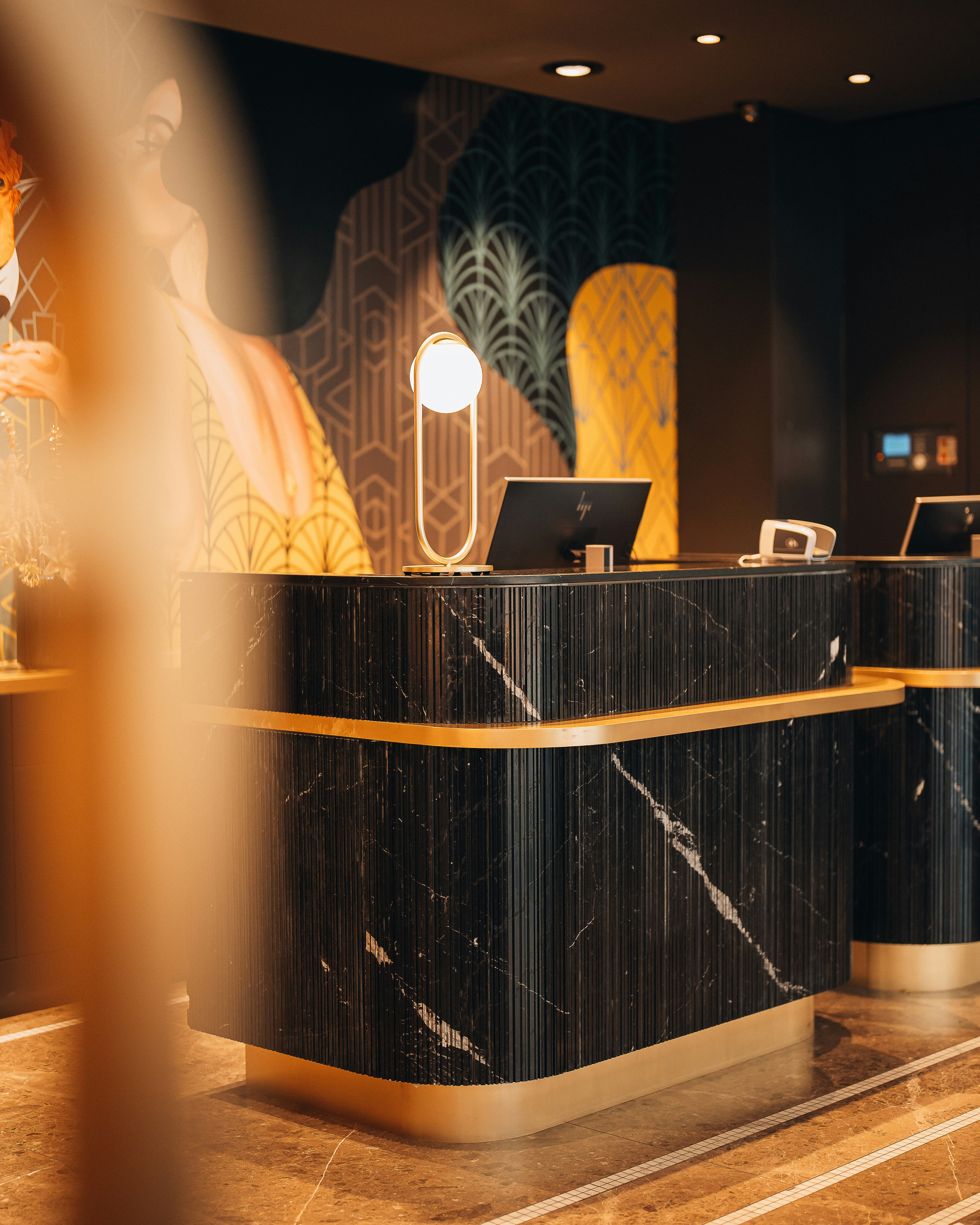
Helping exceptional hoteliers do their best work.
We believe great hospitality is about being present with the guest, not spending time infront of a screen.