6 min
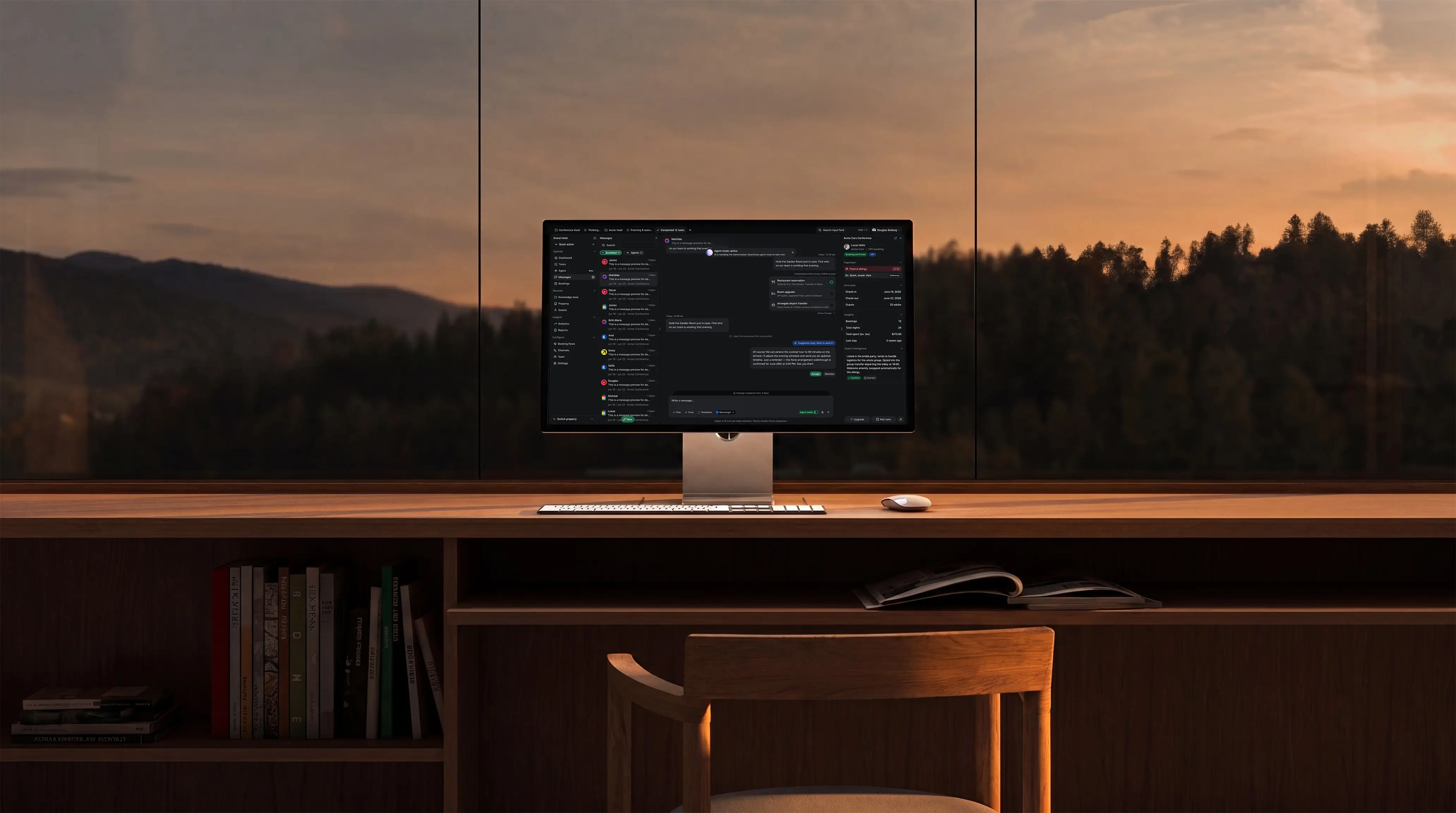
Walk into almost any hotel back office and you will see the real engine of operations: people in front of screens. Staff copy a booking from the channel manager into the PMS, chase an event deposit by email, reconcile a banquet order, update a rate, and answer the same guest question for the tenth time that day. The software is busy. The people are busier.
For two decades, hotel technology has been very good at storing information and very bad at doing anything with it. That era is ending. A new category, agentic hotel software, flips the model. Instead of waiting for a human to act on the data, the software acts, coordinates, and completes the routine work itself, while staff approve the important calls.
This is the shift that will quietly reshape how hotels run. Here is what agentic hotel software is, why it is arriving now, and what it changes on the ground.
The short version
Agentic hotel software is technology that does not just record what is happening at your property. It understands how everything connects and takes action on your behalf. It plans, coordinates, and completes routine operational work autonomously, around the clock, while your team stays in control through quick approvals. The result is less administrative drag, more upsell, and more time for actual hospitality. Three things make it different from the hotel tech you already use:
It acts, rather than just storing data and generating reports.
It reasons across systems, including rooms, spaces, people, and bookings, instead of living in one silo.
It keeps humans in the loop, surfacing suggested actions that your staff approve in a single click.
From systems of record to systems of action
Most hotel tech is a system of record. Your property management system (PMS), channel manager, booking engine, and events tools each hold a slice of the truth. They are reliable filing cabinets, but the moment something needs to happen across them, a person has to be the connective tissue, reading one screen, deciding, and typing into another.
Agentic software is a system of action. It sits across those tools, builds a working model of how your property actually operates, and carries out workflows on its own. The difference is less about smarter dashboards and more about who does the work.
Traditional hotel software | Agentic hotel software | |
|---|---|---|
Core job | Store data, show reports | Understand context and take action |
Who does the work | Staff, manually, screen to screen | The system, with staff approving |
Scope | One silo (PMS, channel, events) | Reasons across rooms, spaces, people, bookings |
Availability | Whenever someone is at the desk | Continuous, around the clock |
Staff role | Data entry and coordination | Judgment, exceptions, and guest care |
Industry analysts describe this destination as a property operating system, an operational layer where AI coordinates decisions across platforms rather than just passing data between them.
How agentic software changes daily operations
The change shows up in the unglamorous work that eats a hotel team’s day. A few concrete examples:
Bookings and events. Instead of a manager manually checking space availability, drafting a proposal, and chasing a deposit, agentic software can assemble the booking, flag conflicts across rooms and spaces, and prepare the messages that need to go out, then ask a human to approve before anything is sent.
Guest communication. Routine questions, confirmations, and details before arrival get handled instantly and consistently, at any hour, instead of piling up in an inbox until someone has a free moment.
Back office admin. Reconciliation, task routing, and the small handoffs between departments, the work that quietly burns hours, get completed in the background.
Coordination across the property. Because the system models how your spaces, resources, and people connect, it can sequence work the way an experienced operator would, rather than treating each request in isolation.
Crucially, none of this means the software runs off and does whatever it wants. The well built version of this surfaces suggested actions that your staff review and approve. You get the speed of automation with the accountability of human judgment.
Why this is happening now
Agentic AI is no longer a far off promise. 2026 is widely described as its inflection point in hospitality. A few forces are converging:
The technology crossed a threshold. AI models can now reason through tasks that take many steps reliably enough to be trusted with real operational work, not just chat replies.
Adoption is accelerating fast. Gartner forecasts that the share of enterprise applications with integrated AI agents will rise from roughly 5 percent in 2025 to about 40 percent by the end of 2026, and travel and hospitality have been among the fastest moving sectors.
The economics are relentless. Labor is scarce and expensive, guest expectations keep rising, and margins are thin. Software that absorbs administrative load without adding headcount is exactly what the math calls for. Boston Consulting Group frames the emerging model as hotels that are AI first: leaner to operate and richer in guest experience.
In other words, the capability, the adoption curve, and the business pressure all arrived at the same time.
What it means for your team
The fear with any automation is replacement. The reality of agentic hotel software is closer to the opposite. It removes the screen work that pulls staff away from guests.
Great hospitality has always been about presence, being with the person in front of you, not buried in a booking system. When the software handles the repetitive coordination, your team gets those hours back for the things only people can do: reading a room, fixing a problem with grace, and creating the moment a guest remembers. The role shifts from data entry and chasing tasks toward judgment, exceptions, and care.
And because a good agentic system keeps humans in the approval loop, your staff do not lose control. They trade low value typing for high value decisions.
How to evaluate agentic hotel software
Not all AI for hotels is agentic, and not all agentic tools are built for the realities of a property. If you are assessing options, look for:
Action, not just answers. A chatbot replies. An agentic system completes workflows from start to finish. Ask what it actually does without a human driving.
Real control. You want a clear approval model, where the system proposes and your team confirms, so automation never means losing oversight.
Property awareness. It should model your specific rooms, spaces, and resources, and reason about them like an operator, not apply generic rules.
Fits your stack. Confirm whether it works alongside your existing systems rather than forcing a disruptive replacement of everything.
Security and onboarding. Ask how your data is protected and how long it takes to get live, so you can plan realistically.
This is exactly the philosophy behind Zaplar, the agentic operating system for hotels: software that works in the background, keeps your team in control with approvals in a single click, and knows your property well enough to act like a great operator. You can read more about the team or see it in practice.
Frequently asked questions
What is agentic hotel software?
It is software that not only stores hotel data but acts on it, planning, coordinating, and completing routine operational tasks such as bookings, communication, events, and admin autonomously, while staff approve key actions. It reasons across your property rather than living in a single silo.
Will agentic AI replace hotel staff?
No. It is built to remove repetitive screen work, not people. By handling routine coordination, it frees staff to spend more time with guests. Humans stay in the loop, approving the actions that matter.
Does agentic software replace my PMS?
Not necessarily. Agentic systems are designed to operate across your existing tools, acting as a coordination layer on top of them. When evaluating a vendor, confirm exactly how it integrates with what you already run.
How is this different from a hotel chatbot?
A chatbot answers questions. Agentic software completes work that takes many steps, such as assembling a booking, sequencing tasks across departments, and following up, and only asks a human to approve. It does, rather than just responds.
Is agentic AI secure enough for hotels?
Reputable providers build in data protection and a human approval model so the system never acts unchecked. Ask any vendor directly how they secure guest data and what the AI can and cannot do without sign off.
The takeaway
Hotel software spent twenty years getting good at remembering things. The next era is about getting things done. Agentic hotel software turns the technology from a passive record into an active operator, one that handles the busywork around the clock so your team can do what they do best: take care of guests.
That is not a distant future. It is the shift happening right now, and the hotels that lean into it will run leaner, sell more, and feel more human at the same time.
Curious what agentic operations would look like at your property? Book a demo of Zaplar.
See other articles

Helping exceptional hoteliers do their best work.
We believe great hospitality is about being present with the guest, not spending time infront of a screen.